
The Integrative Physiology and Autonomic Control Lab investigates the physiological process regulating the cardiovascular system during exercise.
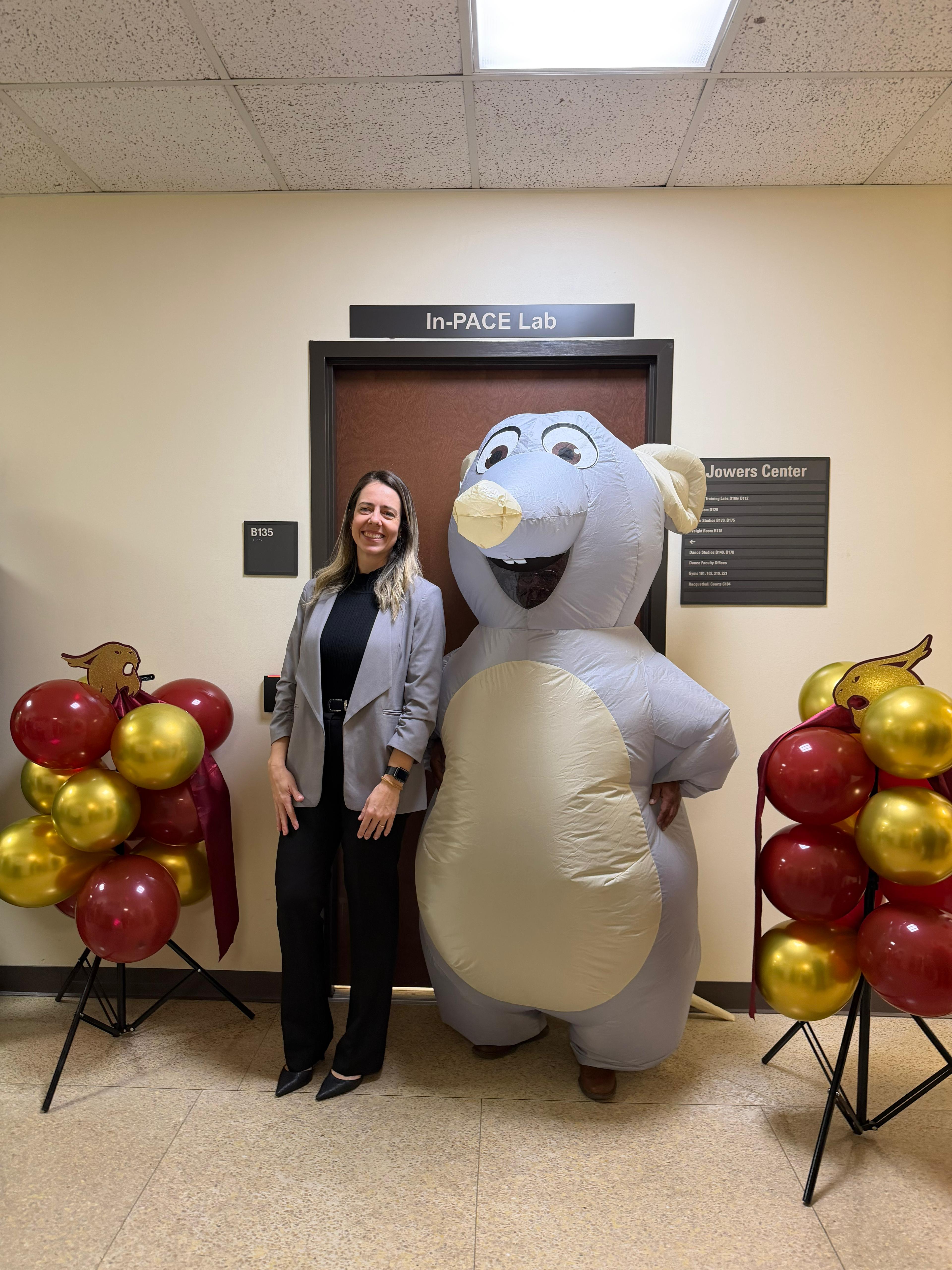
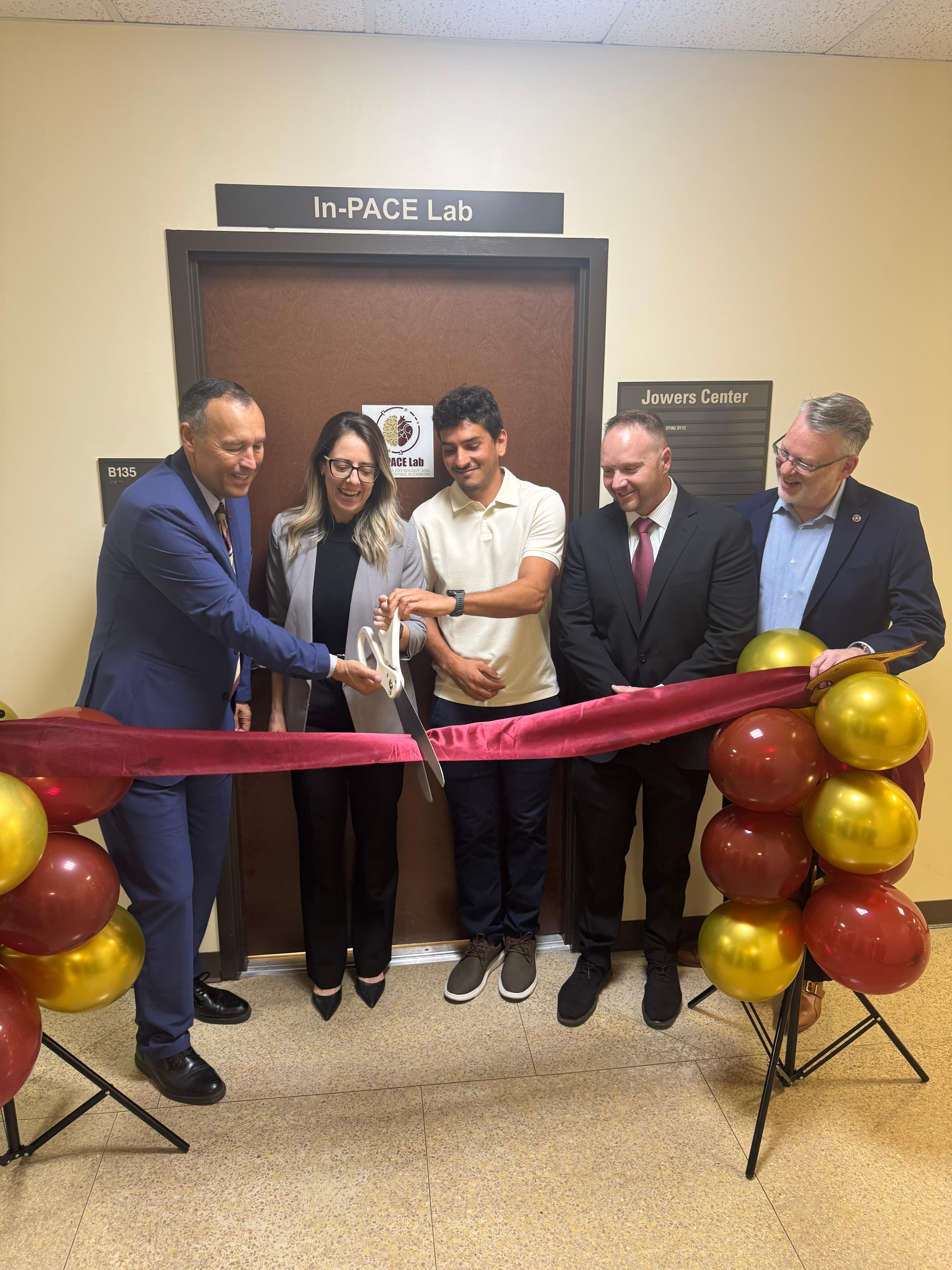
After arriving as a tenure-track assistant professor in Fall 2024, Dr. Milena Samora dos Santos, with the Department of Health and Human Performance (HHP), has officially opened the doors to her long-awaited research facility. The transition marks a significant milestone for the university, as the team successfully transformed a former community-engaged scholarship space into a state-of-the-art laboratory tailored to Dr. Samora dos Santos’ specialized needs.
“It is important to highlight this investment because it demonstrates TXST's commitment to supporting HHP faculty, as well as to investing in early career researchers who are doing innovative and mechanistic research,” Dr. Samora dos Santos said. “While there are numerous research labs within the college, this one is unique as it is the first animal research lab in the Jowers Center.”
Building on her postdoctoral foundation from the University of Texas Austin, Dr. Samora dos Santos is utilizing the new facility to spearhead an independent line of mechanistic studies focused on cardiovascular health. Her team’s research utilizes rodent models to investigate how the body responds to exercise and the ways in which those responses are compromised by diseases like diabetes. With the completion of this high-tech lab, the program is now fully equipped to decode the complex relationship between physical activity and chronic cardiovascular conditions, providing critical research opportunities to faculty and students.
“For students, this lab offers a unique opportunity to gain hands-on experience in basic science research and to learn advanced techniques, including direct measurement of blood pressure, nerve recordings, or electrically-induced muscle contractions. Students will also develop research skills such as scientific presentations, discussions about research methods, and writing manuscripts to name a few, and have opportunities to enhance their scientific networking through conferences.”
The Life-Changing Research
Dr. Samora dos Santos and her team are currently conducting research related to cardiovascular health in people with Type 2 diabetes. With over 34 million Americans currently living with Type 2 diabetes mellitus (T2DM), the stakes for cardiovascular health have never been higher. Cardiovascular disease remains the leading cause of mortality for these patients, accounting for more than half of all deaths within this population. To combat this crisis, Dr. Samora dos Santos and her team are investigating to learn why individuals with T2DM experience dangerous spikes in blood pressure during routine physical activities—such as walking the dog or shoveling snow—that should otherwise be manageable for the body.
According to Dr. Samora dos Santos, central to this research is the arterial baroreflex, a critical biological "thermostat" that regulates blood pressure through rapid autonomic adjustments. In healthy individuals, this reflex maintains blood pressure within a safe range; however, in those with T2DM, the system often malfunctions. This dysfunction not only leads to daily struggles with dizziness and orthostatic hypotension but also significantly elevates the risk of life-threatening events like strokes and heart attacks.
“The current research program in the lab is to identify the mechanisms underlying this abnormal blood pressure control in T2DM,” she said.
Another exciting highlight in opening the new lab in Jowers Center is HHP’s increased relationship with other research-related entities on campus, in particular the Comparative Research Facility (CRF).
“We are thrilled to collaborate with the campus vivarium, CRF, housed at the Family and Consumer Science Building,” Dr. Samora dos Santos said. “Animals are housed at CRF, while the experiments are conducted in the Jowers lab. This lab will provide valuable opportunities for collaboration between me and colleagues within HHP, as well as across campus.”
You can learn more about the In-PACE lab by visiting https://www.hhp.txst.edu/research-labs/integrative-physiology-autonomic-control-lab.html