
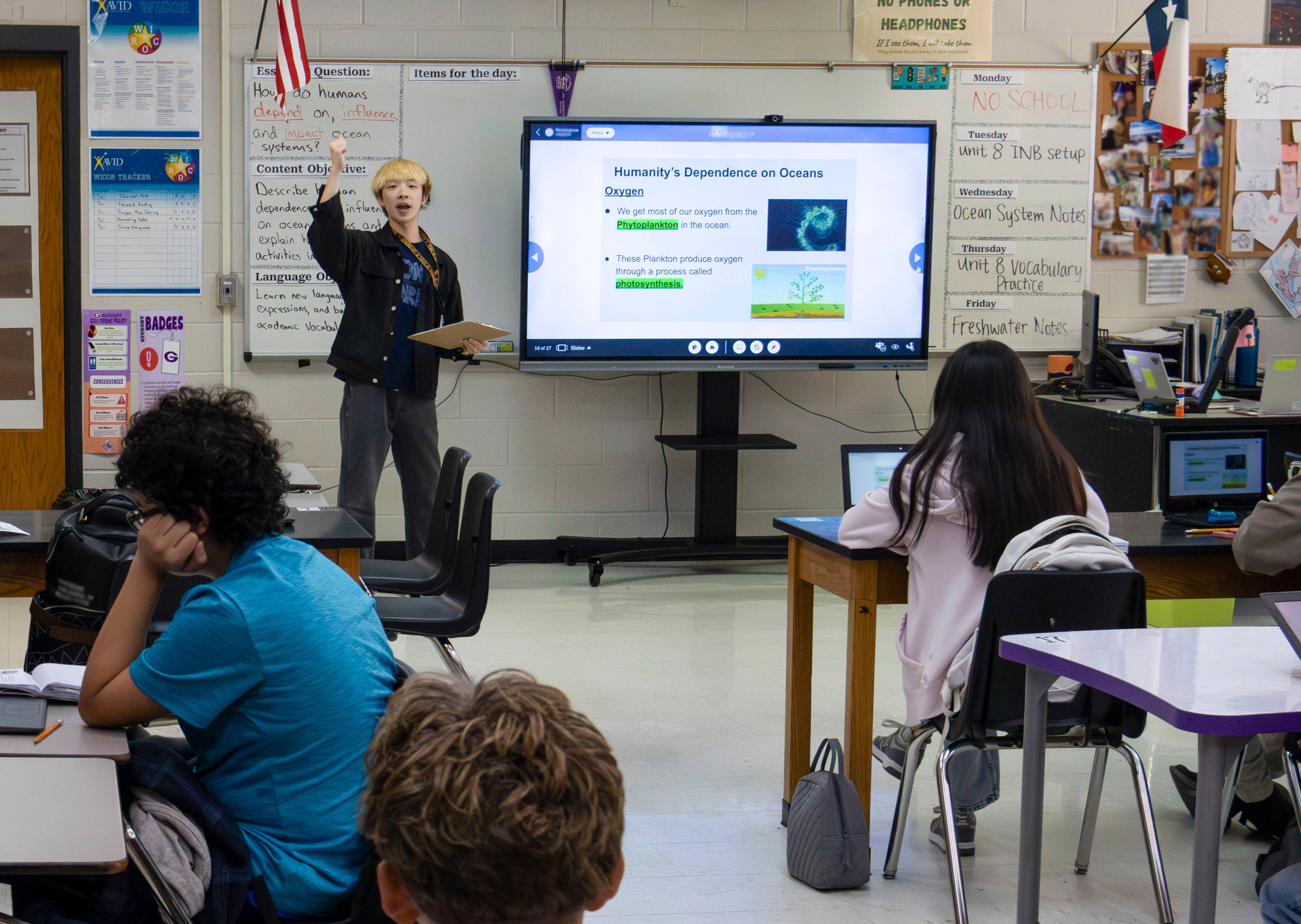
Vincent Lam, a TXST student and current teacher resident at Owen Goodnight Middle School, speaks to his science class.
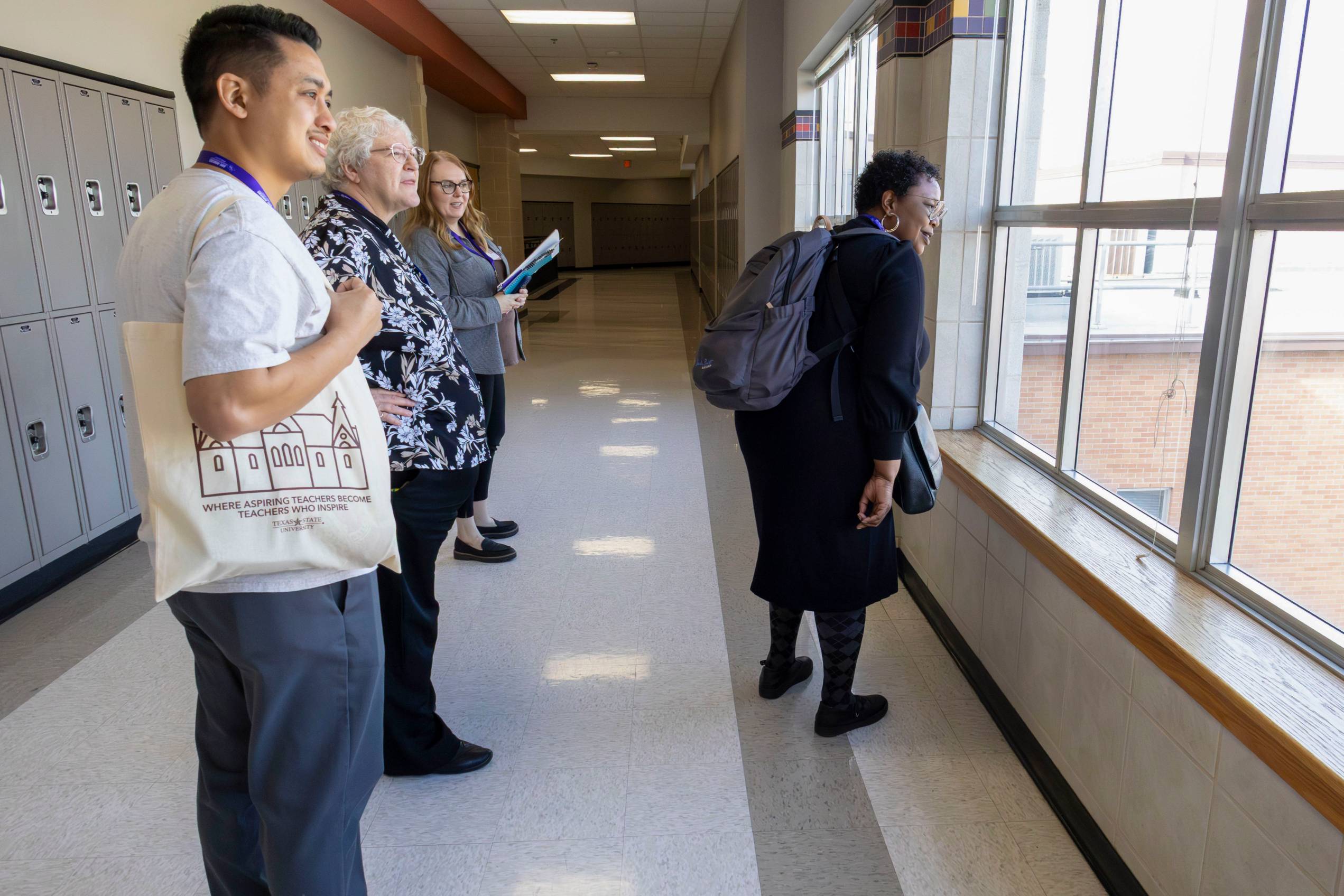
Faculty and staff from Texas State University visited campuses across San Marcos Consolidated Independent School District on Feb. 12 for a Residency Learning Tour showcasing the district’s growing Teacher Residency Pathway.
The visit began at Owen Goodnight Middle School with an overview of the partnership before attendees toured classrooms at several schools in the city to observe resident teachers and program graduates in action. Throughout the district, residents are embedded in campuses for a full academic year, working alongside a single cooperating teacher for two semesters.
The extended placement allows residents to gain hands-on experience while building meaningful relationships with students and staff — a structure district leaders say strengthens both instruction and retention.
A Locally Built Solution
Superintendent Dr. Michael Cardona shared that the idea for a residency program began after hearing about a similar model in a neighboring district.
“I texted and asked, ‘Why aren’t we doing this in San Marcos?’” Cardona recalled.
By the end of that short drive back to San Marcos, district leaders were already mapping out a plan in collaboration with Texas State. From the beginning, the focus was clear: improve student outcomes and create a sustainable pipeline of high-quality teachers trained specifically for San Marcos schools.
“We knew if we could get residents in the building sooner, our kids would benefit,” Cardona said. “That’s what it’s about — benefiting our students.”
The program launched during a time when districts nationwide were grappling with teacher shortages and the lasting impacts of COVID-19. The residency model, district leaders say, has become a key strategy in addressing retention challenges while strengthening classroom instruction.
Keeping Talent in the Community
For campus leaders, one of the program’s greatest successes is its ability to retain strong educators locally.
Analeasa Holmes, principal of Crockett Elementary School, emphasized the long-term impact.
“The most meaningful part of participating in the residency program has been keeping high-quality teachers in our own community for our students,” Holmes said.
By investing in residents early — and often providing financial support through district-funded stipends — San Marcos CISD has built a pathway that encourages graduates to remain in the district after completing their preparation.
Building Relationships That Matter
The yearlong placement also creates consistency for students. Rather than entering a classroom for only a few weeks, residents are present from the first day of school to the last.
Kory Kuhl, a current resident in the program, said that continuity has shaped his experience.
“I would say that being able to build real relationships has been the most meaningful part of this whole experience for me,” Kuhl said. “To build those relationships from the first day of school and I'm going to be there on the last day of school. And seeing how that grows and develops.”
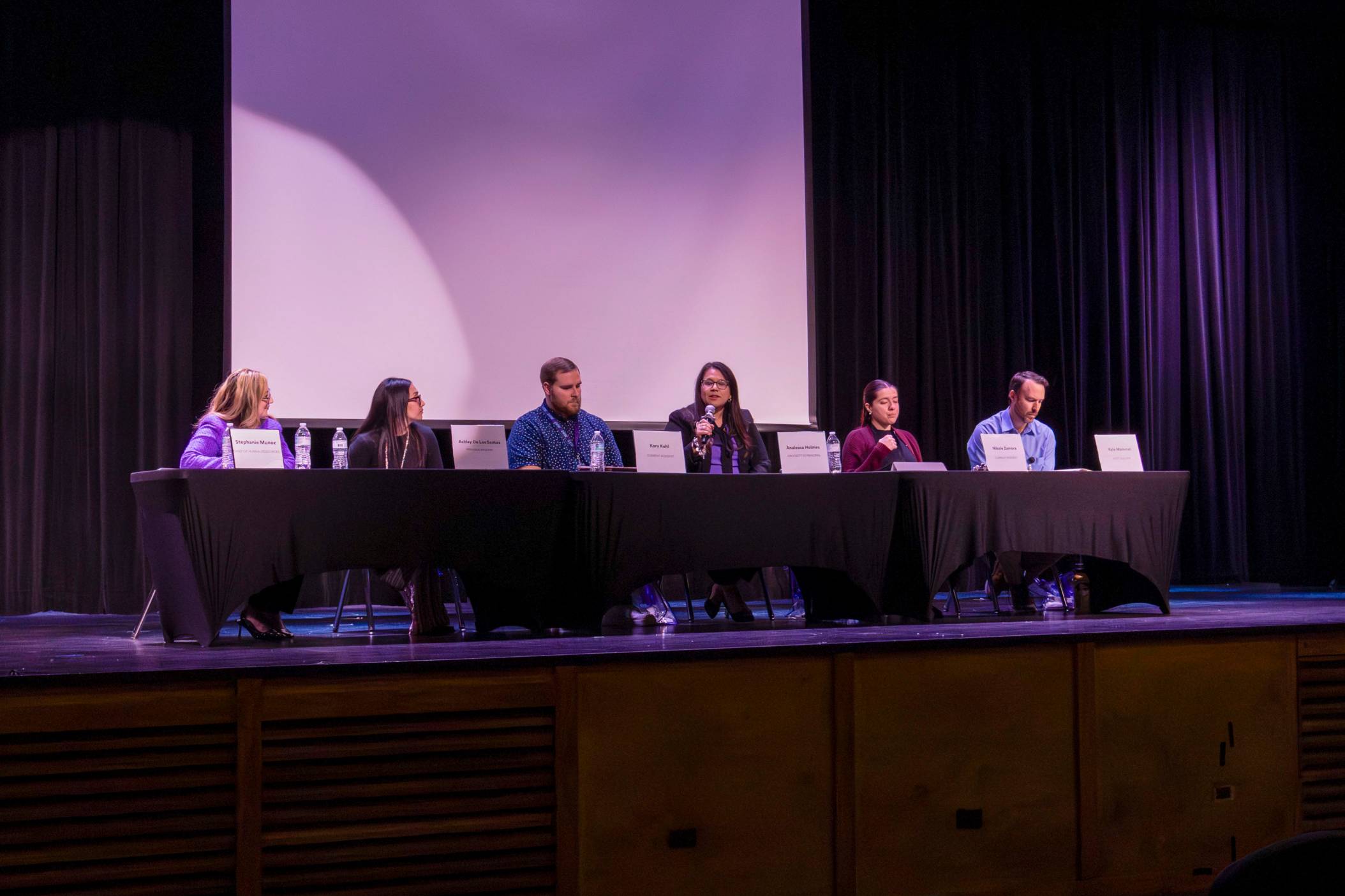
A panel consisting of staff, faculty, and current and former teacher residents from the district.
The program also includes a strong emphasis on secondary education, specifically grades 7–12, ensuring residents are prepared to meet the academic and developmental needs of middle and high school students.
District leaders say the partnership with Texas State continues to evolve, adapting to new funding structures and expanding its reach. What began as a simple question has grown into a model drawing broader attention for its collaborative approach.
For San Marcos CISD and Texas State, the Feb. 12 tour served as both a celebration and a reminder of the program’s purpose: preparing effective educators while improving outcomes for students across the district.